
Discover
A THOUSAND-YEAR HISTORY BETWEEN MYTH, RELIGIOUS POWER, AND COMMUNITY LIFE
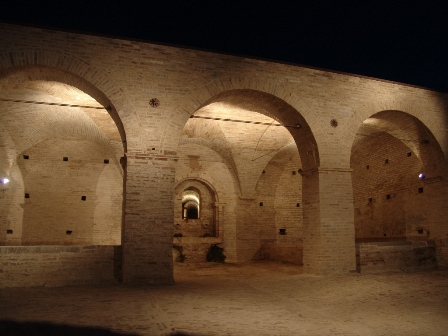
The origins of Montelupone are lost between myth and archaeology. According to legend, the village was founded under the protection of Hercules Libycus or by the Roman lineage of the Lippia family, while historical studies trace its name to the powerful Lombard family of the Luponi, documented as early as the 8th century. The discovery of a Picene necropolis and the remains of Roman villas scattered throughout the area testify to a continuous human presence on the hill since the 6th century BC.
With the foundation of the Benedictine Abbey of San Firmano in the 10th century, Montelupone became an important spiritual and economic center, capable of controlling vast territories reaching all the way to the coast. During the Middle Ages, the village was fortified with walls and towers, taking on the shape of an autonomous community that found its identity and security in its own civic organization.
Its later history was marked by alternating phases: factional struggles, ecclesiastical dominations, but also an extraordinary artistic and cultural flourishing that led to the construction of churches, palaces, and theaters, enriched by the work of local artists and craftsmen. This heritage, proudly preserved, still makes Montelupone today a village capable of vividly telling its thousand-year-old story.
TRADITIONS, CULTURE AND FLAVORS
The life of Montelupone is marked by events that blend spirituality, culture, and conviviality. In spring, the feast of the Patron Saint, San Firmano, is celebrated with religious rituals and community gatherings that involve the entire village. In May, the streets come alive with the historic Artichoke Festival (Sagra del Carciofo), which celebrates the territory’s symbolic vegetable—tender and spineless, now recognized as a Slow Food Presidia. Summer brings ApiMarche, a fair dedicated to honey and beekeeping, while autumn enriches the calendar with markets and cultural events that keep the village’s social spirit alive.
Culture, however, goes far beyond festivities: Montelupone has given birth to or hosted remarkable figures such as the caricaturist Gabriele Galantara (Ratalanga), painters Corrado Pellini and Cesare Peruzzi, and the humanist Nicola Degli Angeli, after whom the historic theater is named. Through its museums, art galleries, and cultural initiatives, the village continues to tell its story and renew itself.
Flavors complete this experience: alongside the celebrated artichoke and wildflower honey, local cuisine offers rustic pasta dishes, legumes, pork-based specialties, and simple desserts—recipes born from peasant tradition and made special by the authenticity of their ingredients. All this is paired with wines from the Marche hills — from Rosso Piceno to Falerio — offering visitors a tasting journey that evokes the agricultural history of the Potenza Valley.